Devon Foster · 25 September 2026
How Elevation Gradients Shape Infrastructure Resilience in Secluded Highland Settlements
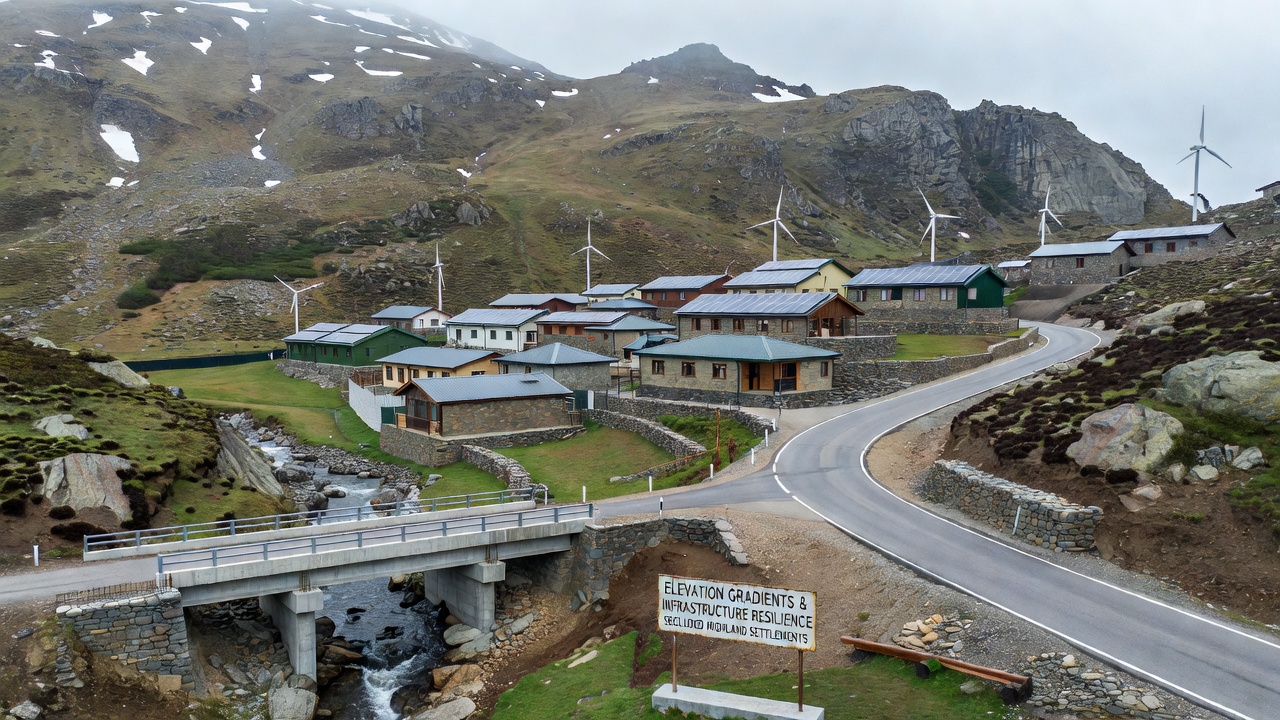
Elevation gradients in secluded highland settlements create distinct pressures on infrastructure systems because steeper slopes and rising altitudes alter material performance, access routes, and exposure to weather events. Research indicates that settlements situated above 2,000 meters often experience accelerated wear on roads and bridges due to freeze-thaw cycles that intensify with each additional 100 meters of elevation gain. Data from monitoring programs show that gradient changes exceeding 8 percent correlate with higher rates of slope instability, which in turn affects the placement and durability of utility corridors.
Transportation Networks Under Gradient Stress
Highland road systems must contend with sharp elevation changes that increase landslide risk and complicate snow removal operations. Engineers design switchbacks and retaining walls to manage grades above 10 percent, yet maintenance crews report that these features require inspection intervals shortened by 30 percent compared with lowland routes. Observers note that avalanche paths frequently intersect key access roads in settlements like those in the Canadian Rockies, where provincial records document repeated closures lasting several days during peak winter months.
Bridge construction in these areas incorporates deeper foundations and specialized bearings to accommodate differential settlement caused by varying soil depths along elevation contours. Studies conducted by research teams in the European Alps reveal that concrete mixes formulated for high-altitude curing achieve only 85 percent of their design strength when poured at temperatures below 5 degrees Celsius, prompting contractors to schedule major pours during narrow seasonal windows.
Water Supply and Sanitation Challenges
Gravity-fed water systems rely on consistent elevation drops to maintain pressure, yet abrupt gradient shifts can produce excessive flow velocities that erode pipe interiors. Utilities in highland regions install pressure-reducing valves at intervals calculated from topographic surveys, while storage tanks must be positioned at intermediate elevations to prevent bursts during spring snowmelt surges. Wastewater treatment facilities face additional constraints because septic fields perform poorly in thin soils typical of steep slopes, leading many settlements to adopt centralized collection systems with lift stations powered by backup generators.
Energy and Communication Infrastructure
Power transmission lines traverse elevation gradients that expose conductors to higher wind loads and ice accretion. Utility operators in the Australian Alps have documented that lines at 1,500 meters experience icing events 2.4 times more frequently than those at 800 meters, necessitating reinforced poles and automated de-icing equipment. Substations require climate-controlled enclosures to protect transformers from rapid temperature swings that accompany altitude changes. Communication towers sited on ridge lines benefit from line-of-sight advantages but demand robust anchoring systems capable of withstanding gusts amplified by topographic funneling.
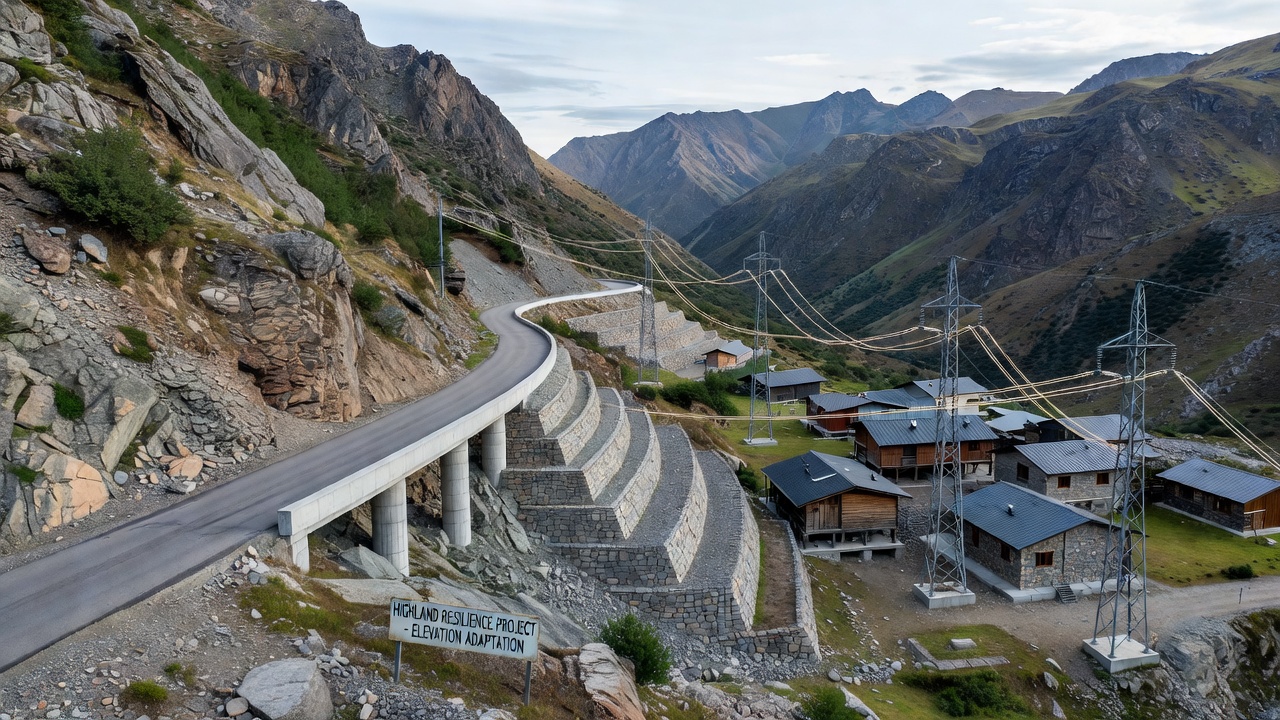
Renewable energy installations such as small-scale hydropower and solar arrays must account for seasonal variations in water flow and solar incidence that shift markedly with elevation. A Natural Resources Canada assessment of mountain microgrids shows that output variability increases by 18 percent for every 500-meter rise in site elevation during shoulder seasons.
Building Foundations and Structural Adaptations
Residential and commercial structures in highland settlements incorporate foundation designs that address both seismic activity common along faulted mountain ranges and the differential movement caused by permafrost thaw at higher elevations. Researchers in Norway's fjord districts have measured foundation heave rates reaching 12 millimeters per year on slopes steeper than 15 percent, prompting the use of adjustable pile systems. Insulation standards rise with altitude because heat loss through building envelopes increases in thinner air, while roof structures must support snow loads that accumulate faster on windward faces of ridges.
Climate Influences and Monitoring Developments
Changing precipitation patterns interact with elevation gradients to modify flood and drought risks for infrastructure assets. Settlements positioned on mid-slope benches often receive runoff from upper catchments while simultaneously facing reduced groundwater recharge, which strains both supply and drainage networks. A forthcoming report from the International Mountain Partnership scheduled for September 2026 will compile multi-decade sensor data across five continents to quantify how gradient steepness modulates these hydrological shifts. In the interim, agencies in New Zealand have begun deploying wireless tiltmeters on critical embankments to provide real-time alerts when slope movement exceeds predefined thresholds.
Emergency response planning incorporates elevation-based accessibility models because helicopter landing zones become limited above certain altitudes during adverse weather. Regional governments maintain stockpiles of repair materials at intermediate elevations to reduce response times when primary routes are blocked.
Conclusion
Elevation gradients therefore dictate the materials, layouts, and maintenance regimes required for infrastructure in secluded highland settlements. Ongoing data collection from distributed sensor networks continues to refine design parameters, while international collaboration supplies comparative benchmarks that help communities adapt existing systems to observed environmental trends.